
Written by Nancy McKay
Activation Warning:
This essay includes references to suicide ideation, alcoholism, and trauma. Please take care
while reading.
Desperation, Grace, and the Long Road Back to Myself
For a long time, I didn’t think I had a drinking problem.
I had a career. I paid my bills. I showed up. I didn’t lose jobs, get DUIs, or wake up in hospital
beds. On paper, my life looked functional, even successful. I was reliable, responsible, and accomplished.
What I didn’t understand at the time was how much effort it took to maintain that
appearance, or how early I’d learned that being “fine” mattered more than being honest.
Learning to Disappear Early
I grew up in a highly functional alcoholic household where appearances were everything,
and feelings were something to be managed quietly, preferably alone. From the outside, we
looked like a normal family. Inside, the atmosphere could shift without warning.
I learned to read a room the way other kids learned to ride bikes. I learned when to speak
and when to stay invisible. I learned how to adjust myself, my tone, and my needs so that no one else became uncomfortable.
I didn’t know that was called people-pleasing. I thought it was love.
That early training followed me into adulthood. It shaped how I worked, how I showed up in
relationships, and how I measured my worth. It also left me with a constant, low-grade
anxiety I didn’t yet have language for.
Alcohol arrived as relief.
Alcohol as Relief, Until It Wasn’t
I started drinking socially, casually, the way many people do. Alcohol softened the edges. It quieted my mind. It made me feel more confident, more connected, more acceptable.
Over time, it became my primary coping strategy. When I felt overwhelmed, I drank. When I
felt lonely, I drank. When grief arrived, I drank so I wouldn’t have to feel it fully.
For years, I told myself I was managing. I was a “party girl,” but a responsible one. I still went to work. I still showed up. Nothing had fallen apart in a way that forced me to stop.
What I didn’t see was how much smaller my world was becoming.
After my mother died from cancer and my father lost his long battle with alcoholism,
something shifted. My drinking stopped being social and started being necessary. I drank
to take the edge off my thoughts, my guilt, my sadness. I drank to sleep. I drank to cope.
I didn’t recognize myself anymore, but I also didn’t know how to live without alcohol.
The Day Everything Finally Cracked
Friday, March 13, 2009, started like too many days before it.
I woke up nauseous, shaky, and exhausted. My hands trembled as I tried to put on eyeliner. I remember thinking, Just get through the day. I was already counting the hours until I could drink and feel “normal” again.
That night, after what I told myself was not that much alcohol, my husband said five words
that landed harder than anything else could have:
“I think you’ve had enough.”
It wasn’t cruel. It wasn’t loud. It was matter-of-fact.
And it shattered me.
In that moment, years of unspoken shame and self-loathing rose up all at once. I became
convinced, with terrifying certainty, that everyone would be better off without me. That I
was a burden. That I had failed at being a functional adult, a good partner, a capable
human.
Alcohol didn’t soothe me that night. It exposed how fragile I already was.
In a moment of desperation, I tried to end my life.
The gunshot shattered the quiet, hitting nothing but a pillow.
The sound snapped me back into my body, and everything changed.
I wasn’t suddenly hopeful or healed, but I was terrified. And that fear saved my life.
I got scared sober.
The Longest, Quietest Day
The next day was St. Patrick’s Day weekend. I was supposed to be downtown, celebrating,
drinking, pretending everything was fine.
Instead, I sat alone on my patio, wrapped in shame, replaying the night before, trying to
understand how I had gotten there. I remember thinking, I can’t drink anymore. And
almost immediately, I don’t know how not to. I didn’t feel brave. I felt stripped bare.
I gathered the books about quitting that I’d bought over the years and never opened. I
drank coffee, smoked cigarettes, cried, read, and sat with myself in a way I never had before.
There was no dramatic declaration, just a quiet knowing that something had to change.
I called a neighbor who was in recovery. She took me to my first AA meetings. I cried
through all of them. I remember sitting there thinking, So this is it. This is where my life
landed.
And also, more quietly, Maybe this is where it begins.
Early Sobriety Was Not Graceful
Sobriety was not a pink cloud for me.
It was raw, uncomfortable, and exhausting. I went to meetings every day for over a year. I
didn’t trust myself. I didn’t trust my emotions. Without alcohol, everything I had avoided
came rushing in.
There were days I sat on the couch staring at the wall, wondering how other people lived
without anesthetizing themselves. There were moments I missed drinking fiercely, not
because I wanted to be drunk, but because I wanted relief.
I learned that alcohol had never been my real problem. It had been my solution.
Without it, I had to learn new ways to live, to feel, to stay present. Slowly, almost
imperceptibly, I began to trust myself again. I learned how to sit with discomfort instead of
running from it. I learned that my inner voice, the one I’d ignored for decades, had been
trying to protect me all along.
When Life Tested My Sobriety Again
A few years into recovery, just when life felt stable, I woke up from surgery on my birthday to
learn I had Stage 1C ovarian cancer.
Cancer has a way of clarifying things.
Chemotherapy was grueling. The fatigue was relentless. My body changed. My energy
disappeared. And yet, through it all, I stayed sober. Not because it was easy, but because I
knew exactly what alcohol would cost me.
During that time, one sentence kept repeating in my mind:
“I didn’t get sober and survive cancer to be miserable.”
That truth became my anchor.
Recovery as a Way of Living
Sobriety didn’t give me a perfect life. It gave me access to myself.
Recovery taught me how to listen inward instead of constantly scanning for external
approval. It taught me how to set boundaries, tell the truth, and stop abandoning myself to keep others comfortable.
Today, I’ve been sober since March 14, 2009.
I don’t romanticize recovery. It’s work. It’s ongoing. And it’s worth every uncomfortable,
honest moment. Sobriety didn’t give me a better version of my old life. It gave me a real one. And that changed everything.
Author Bio
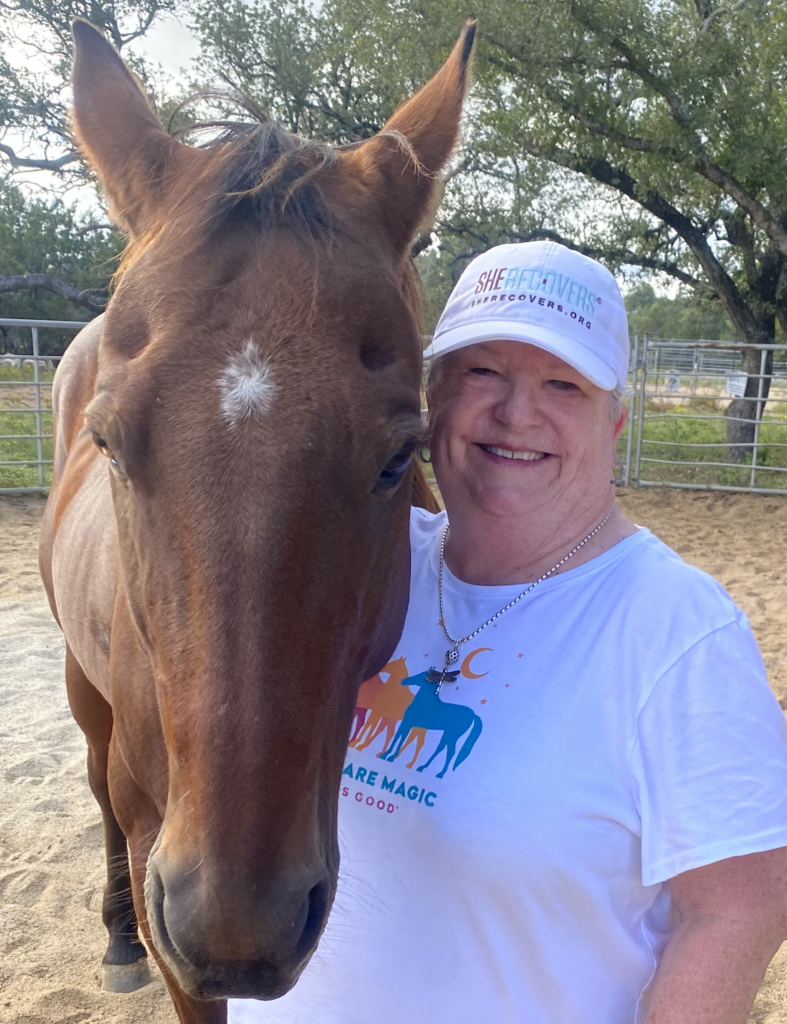
Nancy McKay is a Certified Life Coach, Equus Coach Master Facilitator®, and SHE
RECOVERS® Coach, who has been sober since 2009. She is the founder of Women
Empowered Recovery and the creator and author of The BRAVE Recovery Method™.
Nancy leads recovery-focused retreats with horses and works with women navigating
sobriety, grief, trauma, and major life transitions. You can learn more about Nancy HERE or find her on Facebook, Instagram, LinkedIn, and Pinterest.